Pages

Wednesday, September 16, 2020

Your Coronavirus Test Is Positive. Maybe It Shouldn’t Be.

 The usual diagnostic tests may simply be too sensitive and too slow to contain the spread of the virus.

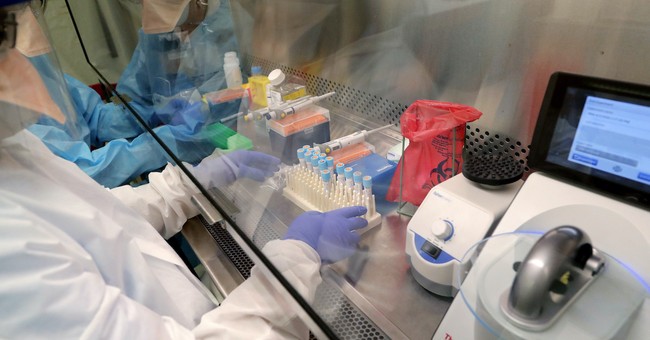
Tests authorized by the F.D.A. provide only a yes-no answer to infection, and will identify as positive patients with low amounts of virus in their bodies.
Credit...Johnny Milano for The New York Times

Some of the nation’s leading public health experts are raising a new concern in the endless debate over coronavirus testing in the United States: The standard tests are diagnosing huge numbers of people who may be carrying relatively insignificant amounts of the virus.

Most of these people are not likely to be contagious, and identifying them may contribute to bottlenecks that prevent those who are contagious from being found in time. But researchers say the solution is not to test less, or to skip testing people without symptoms, as recently suggested by the Centers for Disease Control and Prevention.

Instead, new data underscore the need for more widespread use of rapid tests, even if they are less sensitive.

“The decision not to test asymptomatic people is just really backward,” said Dr. Michael Mina, an epidemiologist at the Harvard T.H. Chan School of Public Health, referring to the C.D.C. recommendation.

“In fact, we should be ramping up testing of all different people,” he said, “but we have to do it through whole different mechanisms.”

In what may be a step in this direction, the Trump administration announced on Thursday that it would purchase 150 million rapid tests.

  • Journalism for every part of life.
Subscribe for $1 a week.

The most widely used diagnostic test for the new coronavirus, called a PCR test, provides a simple yes-no answer to the question of whether a patient is infected.

But similar PCR tests for other viruses do offer some sense of how contagious an infected patient may be: The results may include a rough estimate of the amount of virus in the patient’s body.

“We’ve been using one type of data for everything, and that is just plus or minus — that’s all,” Dr. Mina said. “We’re using that for clinical diagnostics, for public health, for policy decision-making.”

But yes-no isn’t good enough, he added. It’s the amount of virus that should dictate the infected patient’s next steps. “It’s really irresponsible, I think, to forgo the recognition that this is a quantitative issue,” Dr. Mina said.

The PCR test amplifies genetic matter from the virus in cycles; the fewer cycles required, the greater the amount of virus, or viral load, in the sample. The greater the viral load, the more likely the patient is to be contagious.

This number of amplification cycles needed to find the virus, called the cycle threshold, is never included in the results sent to doctors and coronavirus patients, although it could tell them how infectious the patients are.

In three sets of testing data that include cycle thresholds, compiled by officials in Massachusetts, New York and Nevada, up to 90 percent of people testing positive carried barely any virus, a review by The Times found.

On Thursday, the United States recorded 45,604 new coronavirus cases, according to a database maintained by The Times. If the rates of contagiousness in Massachusetts and New York were to apply nationwide, then perhaps only 4,500 of those people may actually need to isolate and submit to contact tracing.

One solution would be to adjust the cycle threshold used now to decide that a patient is infected. Most tests set the limit at 40, a few at 37. This means that you are positive for the coronavirus if the test process required up to 40 cycles, or 37, to detect the virus.

Tests with thresholds so high may detect not just live virus but also genetic fragments, leftovers from infection that pose no particular risk — akin to finding a hair in a room long after a person has left, Dr. Mina said.

Any test with a cycle threshold above 35 is too sensitive, agreed Juliet Morrison, a virologist at the University of California, Riverside. “I’m shocked that people would think that 40 could represent a positive,” she said.

CORONAVIRUS SCHOOLS BRIEFING: It’s back to school — or is it?

A more reasonable cutoff would be 30 to 35, she added. Dr. Mina said he would set the figure at 30, or even less. Those changes would mean the amount of genetic material in a patient’s sample would have to be 100-fold to 1,000-fold that of the current standard for the test to return a positive result — at least, one worth acting on.

Image“It’s just kind of mind-blowing to me that people are not recording the C.T. values from all these tests, that they’re just returning a positive or a negative,” one virologist said.
Credit...Erin Schaff/The New York Times

The Food and Drug Administration said in an emailed statement that it does not specify the cycle threshold ranges used to determine who is positive, and that “commercial manufacturers and laboratories set their own.”

The Centers for Disease Control and Prevention said it is examining the use of cycle threshold measures “for policy decisions.” The agency said it would need to collaborate with the F.D.A. and with device manufacturers to ensure the measures “can be used properly and with assurance that we know what they mean.”

The C.D.C.’s own calculations suggest that it is extremely difficult to detect any live virus in a sample above a threshold of 33 cycles. Officials at some state labs said the C.D.C. had not asked them to note threshold values or to share them with contact-tracing organizations.

For example, North Carolina’s state lab uses the Thermo Fisher coronavirus test, which automatically classifies results based on a cutoff of 37 cycles. A spokeswoman for the lab said testers did not have access to the precise numbers.

This amounts to an enormous missed opportunity to learn more about the disease, some experts said.

“It’s just kind of mind-blowing to me that people are not recording the C.T. values from all these tests — that they’re just returning a positive or a negative,” said Angela Rasmussen, a virologist at Columbia University in New York.

“It would be useful information to know if somebody’s positive, whether they have a high viral load or a low viral load,” she added.

Officials at the Wadsworth Center, New York’s state lab, have access to C.T. values from tests they have processed, and analyzed their numbers at The Times’s request. In July, the lab identified 872 positive tests, based on a threshold of 40 cycles.

With a cutoff of 35, about 43 percent of those tests would no longer qualify as positive. About 63 percent would no longer be judged positive if the cycles were limited to 30.

In Massachusetts, from 85 to 90 percent of people who tested positive in July with a cycle threshold of 40 would have been deemed negative if the threshold were 30 cycles, Dr. Mina said. “I would say that none of those people should be contact-traced, not one,” he said.

Other experts informed of these numbers were stunned.

“I’m really shocked that it could be that high — the proportion of people with high C.T. value results,” said Dr. Ashish Jha, director of the Harvard Global Health Institute. “Boy, does it really change the way we need to be thinking about testing.”

Dr. Jha said he had thought of the PCR test as a problem because it cannot scale to the volume, frequency or speed of tests needed. “But what I am realizing is that a really substantial part of the problem is that we’re not even testing the people who we need to be testing,” he said.

The number of people with positive results who aren’t infectious is particularly concerning, said Scott Becker, executive director of the Association of Public Health Laboratories. “That worries me a lot, just because it’s so high,” he said, adding that the organization intended to meet with Dr. Mina to discuss the issue.

The F.D.A. noted that people may have a low viral load when they are newly infected. A test with less sensitivity would miss these infections.

But that problem is easily solved, Dr. Mina said: “Test them again, six hours later or 15 hours later or whatever,” he said. A rapid test would find these patients quickly, even if it were less sensitive, because their viral loads would quickly rise.

PCR tests still have a role, he and other experts said. For example, their sensitivity is an asset when identifying newly infected people to enroll in clinical trials of drugs.

But with 20 percent or more of people testing positive for the virus in some parts of the country, Dr. Mina and other researchers are questioning the use of PCR tests as a frontline diagnostic tool.

People infected with the virus are most infectious from a day or two before symptoms appear till about five days after. But at the current testing rates, “you’re not going to be doing it frequently enough to have any chance of really capturing somebody in that window,” Dr. Mina added.

Highly sensitive PCR tests seemed like the best option for tracking the coronavirus at the start of the pandemic. But for the outbreaks raging now, he said, what’s needed are coronavirus tests that are fast, cheap and abundant enough to frequently test everyone who needs it — even if the tests are less sensitive.

“It might not catch every last one of the transmitting people, but it sure will catch the most transmissible people, including the superspreaders,” Dr. Mina said. “That alone would drive epidemics practically to zero.”


Source: https://www.nytimes.com/2020/08/29/health/coronavirus-testing.html

Economist: Pay Americans $1,000 each to take a coronavirus vaccine


Yahoo Finance


Analyst on COVID-19 vaccine: ‘Companies with a real vaccine history and backbone are going to have their data sets in early 2021'

Public health experts are increasingly concerned about the possibility that a coronavirus vaccine will be successfully developed but not enough Americans would be willing to receive it.

About 70% of a population being vaccinated represents the threshold needed for herd immunity, which dramatically slows the spread of viruses.

Given the potential problem, an expert from the Brookings Institution suggests that the government pay Americans $1,000 each to take the vaccine.

“If we don’t get herd immunity, we’re not getting our economy back and we’re not getting our society and our lives back,” Robert Litan, an economist who served in the Clinton administration and the Brookings scholar who authored the report, told Yahoo Finance (video above). “If you paid $1,000 a person — so for a family of four you’re talking $4,000. In these hard times, that’s a lot of money and I think a lot of people would take the vaccine for $1,000.”

Once the U.S. epicenter, New York's coronavirus cases have decreased dramatically. (Graphic: David Foster/Yahoo Finance)
View photos
Once the U.S. epicenter, New York's coronavirus cases have decreased dramatically. (Graphic: David Foster/Yahoo Finance)

Top infectious disease expert Dr. Anthony Fauci, who said recently he would “settle” for a vaccine that is 70-75% effective, has stated that the U.S. would not reach herd immunity if as many as 25% of the population chose to not get vaccinated.

"That's one of the reasons why we have to make sure we engage the community as we're doing now, to get community people to help us, for people to understand that we are doing everything we can to show that it's safe and that it's effective and that it's for the good of them as individuals and in society to take the vaccine," he told CNN in June.

Americans who step forward to take the vaccine should receive $200 upfront, according to Litan’s proposal, with the remainder being paid once the country has reached herd immunity.

“So now everyone that takes the vaccine has an incentive to go on social media,” Litan said, “talk to their friends, talk to their family, talk to their church colleagues, etc work colleagues, and say, ‘Hey take the vaccine because you and I will both get that extra $800.’”

Counselor to the President Kellyanne Conway wears a mask before the US president speaks on vaccine development in the Rose Garden of the White House in Washington, DC on May 15, 2020. (Photo by MANDEL NGAN / AFP) (Photo by MANDEL NGAN/AFP via Getty Images)
View photos
Counselor to the President Kellyanne Conway wears a mask before the US president speaks on vaccine development in the Rose Garden of the White House in Washington, DC on May 15, 2020. (Photo: MANDEL NGAN / AFP)

The alternative is as long as people stay home’

Litan added that trying to mandate a vaccine shot on the population could backfire.

“If the government tried to force people, you’d have a huge counter reaction,” he said, “much worse than the anti-masking kind of thing we see today.”

Paying Americans $1,000 each to reach 80% herd immunity would cost the U.S. roughly $275 billion.

“The alternative is as long as people stay home and we have massive unemployment,” Litan said. “We’re losing trillions of dollars annually in lost economic output because our economy is not at full employment. And so to get a shot for $275 billion to get our lives back and our economy back seems to me the best investment you can make and it’s cheap in comparison to the alternative.”

Litan’s proposal has its critics, including Milken Institute Chief Economist William Lee. 

“That’s a lot of money,” Lee exclaimed. “Just to get that number in perspective, that’s half the cost of Medicaid [spending],” he said, which totaled $616 billion in 2019.

More from Sibile:

Follow Yahoo Finance on TwitterFacebookInstagramFlipboardLinkedIn, and reddit.

Find live stock market quotes and the latest business and finance news

For tutorials and information on investing and trading stocks, check out Cashay

Oops: It Looks Like the Vast Majority of Positive COVID Results Should Have Been Negative

 Bronson Stocking

|
Posted: Aug 29, 2020 8:35 PM
Oops: It Looks Like the Vast Majority of Positive COVID Results Should Have Been Negative

Source: AP Photo/Gerald Herbert

Testing, testing, testing -- that's how Pelosi and the Democrats say we'll defeat the coronavirus. Meanwhile, President Trump and his administration are conducting "operation warp speed" at breakneck pace to develop therapeutics, diagnostics, and a vaccine for the Wuhan flu. Unlike testing, treatments will actually do something for you when you come down sick with the disease. But now we're learning the overwhelming majority of those who have tested positive for the coronavirus should really have been found negative after all. 

According to The New York Times, potentially 90 percent of those who have tested positive for COVID-19 have such insignificant amounts of the virus present in their bodies that such individuals do not need to isolate nor are they candidates for contact tracing. Leading public health experts are now concerned that overtesting is responsible for misdiagnosing a huge number of people with harmless amounts of the virus in their systems.

"Most of these people are not likely to be contagious, and identifying them may contribute to bottlenecks that prevent those who are contagious from being found in time," warns The Times.

So, if overtesting is causing "bottlenecks" that keep us from identifying contagious people in time, what does The New York Times believe the solution should be? More testing!

It helps to understand The Times' religious devotion to testing if one understands that Democrats have long-since committed to taking the polar opposite position of whatever President Trump believes. It's a symptom of Trump Derangement Syndrome. If Trump is hopeful about the effectiveness of hydroxychloroquine, then Democrats believe the drug will kill you. If Trump believes we should focus less on testing and more on treatments, Democrats and the media will insist we do nothing but testing and forget about treatments altogether.

This is the state of reference through which The Times can publish an article admitting that overtesting is creating deadly delays while continuing their demand for increased testing. The Times has now modified its call for more testing by saying everyone should specifically get a rapid test, which has a higher threshold for the quantity of the virus needed in order to render a positive result.

"In what may be a step in this direction, the Trump administration announced on Thursday that it would purchase 150 million rapid tests," The Times admitted. 

Recommended
The Devil and Karl Marx
Walter E. Williams

A step? 150 million rapid tests -- enough to test nearly half of all Americans -- and that's just "a step" in The Times' estimation. 

It looks like the CDC was right, and not The Times, when the CDC issued guidance saying not everybody and their mother should get tested for COVID-19. 

If the coronavirus has made one thing clear, it's that so-called "scientists" and "experts" are wrong all the time. They can't accurately forecast a virus, they tell us different things about the effectiveness of a face mask, they insist the virus can't spread at leftwing protests, and there's a myriad of other examples too long to document here showing us the "experts" are really just making it all up as they go along, with their political biases on display for everyone with eyes to see.

Source:https://townhall.com/tipsheet/bronsonstocking/2020/08/29/it-looks-like-a-lot-of-those-positive-covid-tests-should-have-been-negative-n2575305 

SHOCK REPORT: This Week CDC Quietly Updated COVID-19 Numbers – Only 9,210 Americans Died From COVID-19 Alone – Rest Had Different Other Serious Illnesses

So let’s get this straight – based on the recommendation of doctors Fauci and Birx the US shut down the entire economy based on 9,000 American deaths due entirely to the China coronavirus?

We were first to report that the Director General of the WHO on March 3, 2020 created panic with his highly flawed statement:

While many people globally have built up immunity to seasonal flu strains, COVID-19 is a new virus to which no one has immunity. That means more people are susceptible to infection, and some will suffer severe disease.

Globally, about 3.4% of reported COVID-19 cases have died. By comparison, seasonal flu generally kills far fewer than 1% of those infected.

TRENDING: BREAKING: Milwaukee Trump Supporter Arrested for Brandishing a Gun at Black Lives Matter Mob That Was Surrounding His Home (VIDEO)

This statement caused a global panic.  We, however, knew it was wrong and we wrote about it on March 17, 2020Here is the video of Dr. Ghebreyesus’s remarks.

The WHO leader’s coronavirus death rate number of 3.4% was false and we proved this in our post at the time.

The Gateway Pundit reported, that the coronavirus fatality rate reported by the liberal mainstream media was completely inaccurate and the actual rate more typical to a seasonal flu – the media was lying again.

Do you trust Dr. Fauci?
   
Completing this poll entitles you to The Gateway Pundit news updates free of charge. You may opt out at anytime. You also agree to our Privacy Policy and Terms of Use.

Doctors Fauci and Birx next pushed ridiculous and highly exaggerated mortality rates related to the coronavirus:

** Dr. Tony Fauci and Dr. Deborah Birx used the Imperial College Model to persuade President Trump to lock down the ENTIRE US ECONOMY.
** The fraudulent model predicted 2.2 million American deaths from the coronavirus pandemic
** The authors of the Imperial College Model shared their findings with the White House Coronavirus task force in early March
** Dr. Fauci and Dr. Birx then met with President Trump privately and urged him to shut down the US economy and destroy the record Trump economy based on this model

But the Imperial College model Dr. Fauci and Dr. Birx pushed was garbage and they recommended the destruction of the US economy using this completely flawed model.

Today we now have empirical evidence that the WHO, Dr. Fauci and Dr. Birx were all wrong.  They were charlatans.  They lied.

The CDC silently updated their numbers this week to show that only 6% of all coronavirus deaths were completely due to the coronavirus alone.  The rest of the deaths pinned to the China coronavirus are attributed to individuals who had other serious issues going on.

Also, most of the deaths are very old Americans with co-morbidities.

(Note we updated this post with tweet above because Twitter took down Mel Q’s tweet after we published this post.  We also included a screengrab from the CDC webpage.)

From the CDC.

Not only are the number of deaths linked entirely to the China coronavirus minuscule, but the virus appears to be naturally dying out.

The data above from Europe shows that the number of cases has little correlation to the number of deaths.

Let’s face it – at this moment in time anyone who is pushing for more lockdowns and other abuses on our personal rights is either evil or terribly misinformed.